
2026: Why Holding the Policy Interest Rate Steady Could Be Good News for Quebec's Real Estate Market
For several months, many homebuyers have been waiting for interest rates to decline before moving forward with their real estate plans. But what if the real good news of 2026 isn't the Bank of Canada's next rate decision after all?
The first signs emerging from the market suggest that a much deeper shift is already underway: the return of confidence. And that may ultimately transform the way people buy property in Quebec.
What if everyone has been waiting for the wrong thing?
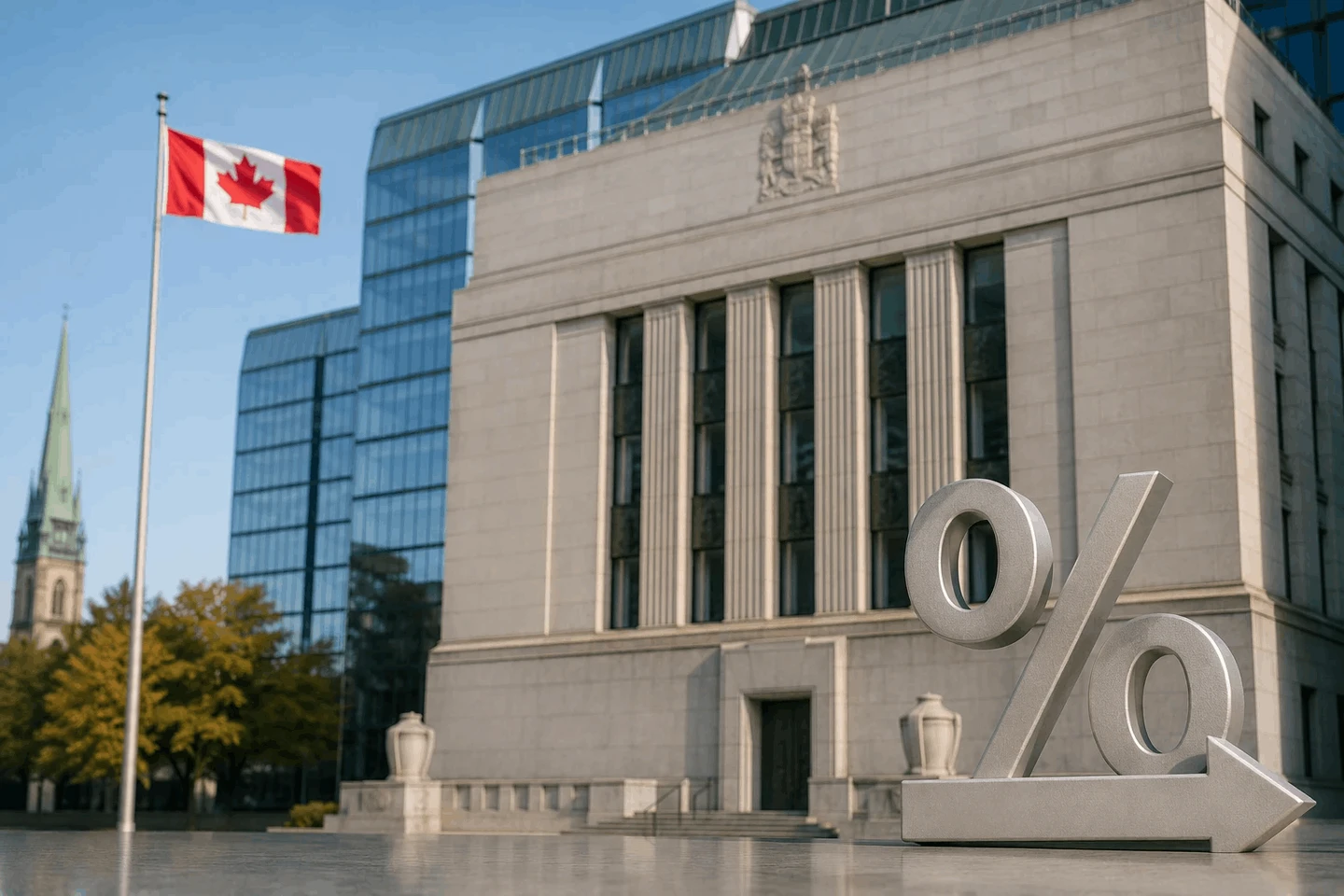
For nearly three years, one sentence has dominated conversations about real estate.
"I'm waiting for interest rates to come down."
Thousands of Quebecers have said exactly that.
Young families dreaming of purchasing their first home.
Households hoping to move into a larger property.
Investors choosing to postpone projects rather than commit in what they consider an uncertain environment.
Their caution is entirely understandable.
Between 2022 and 2024, the Bank of Canada's successive interest rate increases fundamentally changed the housing market. Financing costs rose rapidly, significantly reducing the borrowing capacity of many households.
For some, purchasing a home became considerably more difficult.
For others, it simply became impossible.
Gradually, one idea became firmly established.
The best time to buy would be when interest rates finally started falling again.
At first glance, that logic seems perfectly reasonable.
And yet...
It deserves to be questioned today.
Because the housing market is not driven solely by interest rates.
It is also influenced by something much harder to measure: confidence.
When households don't know how much their mortgage payments may cost in just a few months, they hesitate.
When developers are uncertain whether buyer demand will materialize, they slow their investments.
When homeowners fear another increase in interest rates, they often postpone listing their property for sale.
For several years, this uncertainty dictated the pace of the market.
Today, however, early indicators suggest that this period is gradually coming to an end.
Stability Often Goes Unnoticed... Yet It Changes Everything
On July 15, 2026, economists broadly expected the Bank of Canada to maintain its policy interest rate at 2.25%.
At first glance, that announcement might seem disappointing.
Many people had hoped for another rate cut that would further reduce mortgage borrowing costs.
But this reaction is based on a widely held belief: that only lower interest rates can improve the real estate market.
In reality, stability can sometimes be just as important.
For several months now, households have been operating in a far more predictable environment.
- Mortgage payment estimates fluctuate far less than before.
- Financial institutions have gained greater visibility into future market conditions.
- Buyers can prepare their budgets without worrying that another policy announcement will dramatically alter their calculations just a few weeks later.
This stability doesn't make headlines.
It doesn't generate excitement.
Nor does it create fear.
But it produces something much more profound.
It gradually restores confidence.
And real estate markets rarely function well for long without confidence.
The Real Question Is No Longer: "Will Rates Go Down?"
For years, every Bank of Canada announcement was analyzed as though it alone would determine the future of Canada's housing market.
Today, that perspective is beginning to change.
The key question is no longer whether interest rates will decline by another quarter of a percentage point at the next announcement.
The real question has become:
What's already happening on the ground?
Because meaningful changes are already taking place.
They aren't visible only in Bank of Canada press releases.
They're evident in neighborhoods.
In developers' sales offices.
During property showings.
And in the behavior of buyers themselves.
That is probably where the real story of 2026 lies.
Greater Montreal Is Already Showing That the Market Is Changing
Major real estate trends rarely emerge overnight.
Instead, they develop gradually sometimes almost imperceptibly before becoming obvious a few months later.
That is precisely what we are seeing today across Greater Montreal.
Why start with Montreal?
Because it is Quebec's largest real estate market. Transaction volumes are higher, housing supply evolves more rapidly, and the trends that emerge there often foreshadow what other regions of the province will experience in the months ahead.
The data released by the Quebec Professional Association of Real Estate Brokers (APCIQ) for the month of June all point in the same direction.
The inventory of available properties continues to grow. More than 20,800 residential properties were listed for sale across the Greater Montreal area, representing a significant increase compared with the same period last year.
At the same time, home sales slowed slightly.
Taken individually, these two figures reveal very little.
Together, however, they tell a very different story.
They show that the market is gradually returning to balance.
For several years, buyers felt that every property represented a once-in-a-lifetime opportunity.
A home would hit the market on Thursday.
Showings would take place on Friday.
Offers would be submitted over the weekend.
By Monday, it was often already too late.
In that kind of environment, buying a home became a race against the clock.
Today, that pressure is beginning to ease.
Properties are still selling.
But buyers now have more time to compare options, schedule visits, and carefully consider their decisions.
At first glance, this may seem like a minor change.
In reality, it fundamentally transforms the home-buying experience.
When families have even a few extra days to make their decision, they don't simply visit one house.
- They compare several neighborhoods.
- They evaluate long-term ownership costs.
- They consult with their financial institution.
- They think about their lifestyle instead of worrying about missing an opportunity.
In other words, they are gradually regaining control over their home-buying journey.
And that may well be the best news of the year.
A Growing Supply Is Changing the Rules of the Game
For a long time, scarcity dictated every decision.
When very few properties were available, sellers naturally held greater negotiating power.
Buyers had little choice but to adapt.
Many accepted significant compromises.
- A neighborhood that wasn't exactly what they wanted.
- A home that was slightly too small.
- A property requiring substantial renovations.
- Or even a purchase price that exceeded their original budget.
- Simply because they feared they wouldn't find anything else.
Today, that dynamic is gradually changing.
A larger housing supply doesn't necessarily mean prices are about to collapse.
More importantly, it means buyers are once again gaining genuine choice.
And whenever consumers regain choice, their behavior naturally changes.
- They become more selective.
- They compare more options.
- They take the time to evaluate the strengths and weaknesses of each property.
- They ask more questions.
In real estate, this evolution is fundamental.
Because a purchase made after careful consideration is generally a purchase that stands the test of time.
That is precisely the type of market real estate professionals strive for: one where buying decisions are driven by confidence rather than urgency.
Why This New Reality Is Especially Positive for New Construction

This is probably one of the least discussed aspects of today's market transformation.
When the housing market was extremely competitive, many buyers focused almost exclusively on homes that had just become available.
They rarely had time to explore alternative options.
Today, the situation is different.
A more balanced market allows buyers to look beyond the next available listing.
And that's where new residential developments become particularly attractive once again.
Buying a newly built home isn't simply about purchasing a property.
It's about choosing a lifestyle.
A growing neighborhood.
An architectural vision.
Shared amenities.
Local services.
And a long-term investment in the future.
Making that kind of decision takes time.
And that is exactly what today's market is beginning to provide again.
Over the past several months, many developers have reported a gradual return of prospective buyers to their sales offices.
But these visitors behave differently than they did just a few years ago.
- They no longer come simply to reserve a unit.
- They come to compare.
- They ask to see multiple floor plans.
- They inquire about building materials.
- Environmental certifications.
- Condominium fees.
- Nearby services.
- And the long-term growth potential of the neighborhood.
In other words, buyers are once again choosing a place to build their lives rather than rushing to secure the first available opportunity.
For those interested in exploring this expanding market, browsing new residential developments in Montreal is an excellent way to appreciate how the market is evolving. More than ever, the diversity of available projects allows buyers to compare neighborhoods, developers, and housing options before making one of the most important financial decisions of their lives.
This evolution matters.
Because it shows that Quebec's housing market is not simply returning to normal.
It is gradually becoming more mature.
And that benefits both buyers and developers committed to delivering high-quality projects.
Should You Still Wait Before Buying? Probably Not for the Reasons You Think.
If you've postponed your home-buying plans over the past two or three years, you're certainly not alone.
Thousands of Quebecers have made the very same decision.
- Some were waiting for lower interest rates.
- Others expected a more significant correction in home prices.
Many simply wanted to feel more confident before making what is likely the largest financial commitment of their lives.
That caution was entirely justified.
But in 2026, the question deserves to be asked differently.
The right question is no longer:
"Will interest rates fall again?"
Instead, the better question is:
"Am I ready to move forward with my project?"
That distinction is crucial.
Because no one not even the Bank of Canada can say with certainty where interest rates will be six or twelve months from now.
What everyone can assess, however, is their own situation.
- Do I have a sufficient down payment?
- Is my budget realistic?
- Have I found a neighborhood that truly fits my lifestyle?
- Does the project I'm considering meet my needs for the next ten years?
The answers to those questions will have a far greater impact on the success of your purchase than a 0.25% change in the Bank of Canada's policy interest rate.
For years, buyers felt that their future depended almost entirely on the Bank of Canada's decisions.
Today, they are gradually regaining control over their own real estate journey.
And that may be the most significant change of 2026.
A More Balanced Market Also Rewards Better Projects
When the market is overheated, almost everything sells.
- Outstanding developments.
- Average developments.
- Sometimes even projects with significant shortcomings.
Scarcity leaves very little room for comparison.
The opposite is true when the market begins to rebalance.
Quality becomes increasingly important.
- Buyers take the time to visit multiple developments.
- They compare developers.
- They look into the builder's reputation.
- The quality of construction materials.
- The building's energy performance.
- Shared amenities.
- How well the project integrates into its neighborhood and its long-term appreciation potential.
This evolution is healthy.
It encourages the entire industry to raise its standards.
Developers are motivated to design better projects.
Buyers make more thoughtful decisions.
And communities grow in a more sustainable and coherent way.
For anyone considering a newly built home, this is an especially attractive period.
Not because everything has suddenly become cheaper.
But because buyers can finally take the time to compare projects, visit multiple developments, and choose the one that genuinely matches their lifestyle.
That is precisely the mission of Vistoo: helping buyers discover new residential developments across Quebec, compare the options offered by different developers, and follow the evolution of the market through clear, structured, and continuously updated information.
The Real Story of 2026
Every real estate cycle is remembered for one defining event.
Some people will remember the sharp rise in interest rates.
Others will remember the years when homes sold within hours of being listed.
But 2026 may ultimately be remembered for something far more subtle.
It may be remembered as the year the housing market began to regain its balance.
Not because prices collapsed.
Not because interest rates returned to pre-pandemic levels.
But because buyers gradually recovered something they had been missing for years:
Time.
- Time to visit.
- Time to compare.
- Time to ask questions.
- Time to reflect.
- And ultimately, time to choose.
Perhaps that is the real good news.
For years, everyone focused their attention on the Bank of Canada.
Meanwhile, the market itself was already beginning to change.
The gradual return of housing inventory, greater economic stability, and more thoughtful buyer behavior are slowly reshaping Quebec's real estate landscape.
Challenges certainly remain
Homeownership is still out of reach for many households.
Housing prices remain high in several regions.
And the global economy continues to face significant uncertainty.
Yet one thing now appears increasingly clear.
The market is no longer driven solely by urgency.
It is gradually returning to a healthier environment one where buying decisions are based more on families' needs than on the fear of missing out.
And perhaps that is the greatest lesson of 2026.
The best time to buy is not necessarily when interest rates are at their lowest.
It is when you finally have all the conditions needed to make a confident and well-informed decision.
About the Author
Enzo
Fernandez
Enzo is the co-founder of Vistoo. With over five years of experience in the industry, he has expertise in both the rental and sales markets, along with solid experience in construction and property management. A marketing graduate, he also completed several university projects focused on real estate.
When he’s not working on Vistoo, you’ll likely find him on a soccer field, staying active, or traveling with his laptop, because he just can’t seem to fully unplug from work.