
Wait or Buy: Is My Purchasing Power Disappearing?
A worry many feel without naming it
If you are reading this, there is a good chance this question is on your mind.
Your lease is coming up for renewal. Your place is getting too small. Or you have been scrolling listings for months, wondering whether you should wait.
On Google, people phrase this with simple searches.
- Buy house Quebec
- Wait for rates to drop
- Lease ends, buy or rent
Behind those queries there is not a clever financial plan. There is a concrete worry. The fear that your purchasing power will shrink while you wait, as prices keep rising.
In 2026, that worry is legitimate.
It is fed by several things at once: inflation, economic uncertainty, volatile financial markets, and an already tight housing market.
What recent data show in Quebec
On the ground, prices keep rising. Across much of Quebec, buying costs more than a year ago, though how much varies widely by area and by type of housing. In many markets, increases are around seven percent, sometimes more, sometimes less.
On the rates side, the pace has calmed. After several years of rapid increases, the movement has slowed. The central bank paused its hikes, which helped stop the fast spike in mortgage rates. That said, we are still well above pre-2022 conditions, and any rate reductions are likely to be gradual.
In short
- Prices are still rising
- Rates are falling slowly
- Purchasing power depends on timing
Inflation, investments and the feeling of falling behind
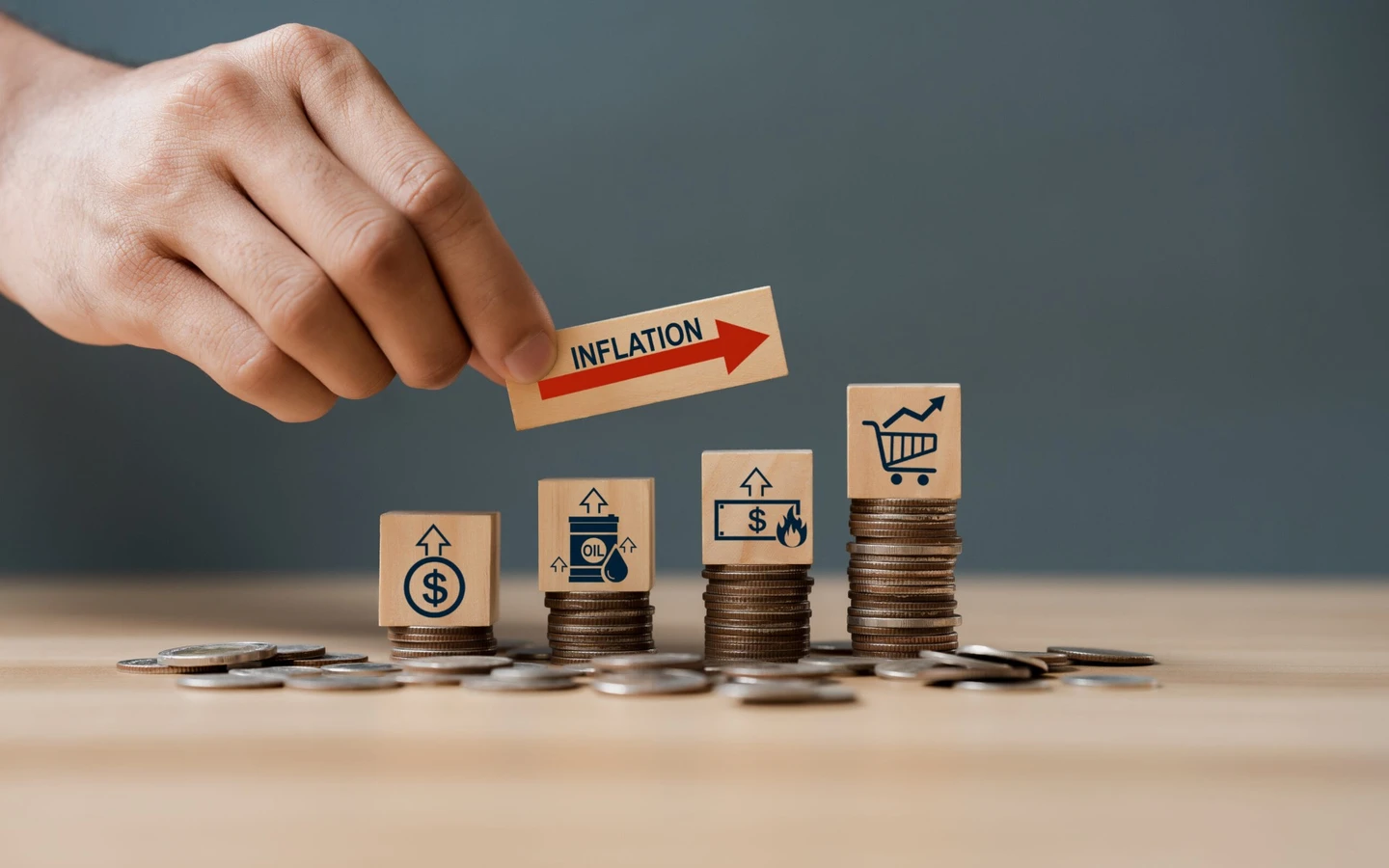
Inflation has changed how households view money. Letting cash sit in an account can feel like losing ground. At the same time, some financial investments, such as stocks, have swung widely, leaving many people with a feeling of falling behind or discomfort.
In this climate, many compare options. Should they buy stocks, put money into a tax-free savings account or an RRSP, or buy a property? Without getting technical, one thing often emerges: housing is perceived as a more concrete, more readable option, especially when economic or political uncertainty rises.
Why housing still reassures many people
Residential property covers a basic need: a place to live. It also plays another role.
Buying a home sets up a form of forced savings. Part of each monthly payment goes to pay down principal. Unlike rent, not all payments disappear.
For many households, this looks like a forced pension or a structured saving method. You do not only save by discipline; the system helps you. Over the long term this can act as a way to prepare for retirement, particularly when public pension systems and financial markets feel uncertain.
The dilemma is still simple
Even with a long-term view, the immediate question remains.
When rates fall, payments drop.
When prices rise, payments increase.
Your purchasing power depends on the balance between those two moves.
A concrete example so you can picture it
Let us take a realistic and intentionally simple case.
Current property price: $536,000
Down payment: 20 percent
Amount borrowed: $428,800
Amortization: 25 years
Current mortgage rate used as reference: 4.7 percent
With these parameters, the monthly payment is about $2,430 per month.
This is our reference point.
If you wait one year: what really happens
Assumption 1: prices up 7 percent
The same property would cost about $573,520.
The amount to borrow rises to $458,816.
If the rate falls slightly, by 0.5 percentage point, the monthly payment climbs to roughly $2,470. You end up paying more each month despite the rate drop.
If the rate falls more, by a full percentage point, the monthly payment drops to about $2,350. In that case, the rate decrease offsets the price increase.
Assumption 2: prices up 10 percent
The price would be about $589,600. In that scenario, a modest rate drop no longer suffices. Even a substantial drop becomes nearly neutral.
The faster prices climb, the more risky it is to wait for rates to fall.
Summary table of scenarios
|
Situation |
Estimated price |
Rate |
Monthly payment approx. |
Change vs buying now |
Down payment (20%) |
|
Buy now |
$536,000 |
4.7% |
$2,430 |
$0 |
$107,200 |
|
Wait 1 year: price +7%, rate −0.5 |
$573,520 |
4.2% |
$2,470 |
+$40 |
$114,704 |
|
Wait 1 year: price +7%, rate −1.0 |
$573,520 |
3.7% |
$2,350 |
−$80 |
$114,704 |
|
Wait 1 year: price +10% (rate variable) |
$589,600 |
variable |
> $2,430 |
likely higher |
$117,920 |
The simple benchmark to remember
With parameters like these:
a 0.5 point drop in rates is offset by a price rise of about 5 percent
a 1.0 point drop in rates is offset by a price rise of about 11 percent
So ask yourself: in your neighbourhood, is it likely that prices will rise faster than these thresholds while you wait? If yes, your purchasing power is eroding.

The special case of tenants at lease end
Renewing a lease is not neutral.
A $1,200 rent that increases by 5 percent becomes $1,260. That is $60 more per month, or $720 more per year. Add that to the cost of waiting.
For some households, buying becomes another way to save. Not by choosing to put money aside every month, but by turning a necessary expense into gradual wealth building.
Ancillary costs often underestimated
Before deciding, include the real costs:
- Notary fees
- Inspection
- Municipal and school taxes
- Insurance
- Annual maintenance
These costs do not negate the case for buying, but they must be anticipated to avoid bad surprises.
Practical tools to run your own numbers
To project your situation you can use:
- Mortgage calculators online
- Rate comparison sites
- Neighbourhood price trackers
- Rent versus buy calculators
These tools do not decide for you, but they help you make the choice objective.
What about other saving options?
Buying is not the only path. Some prefer to invest through a tax-free savings account or an RRSP, others consider rental investments. Each option has its pros and cons.
The main difference is this: housing combines use and investment. It secures your living space while building equity over time, often viewed as a complement to retirement savings.
Conclusion
Your purchasing power does not vanish overnight. It erodes slowly, often during waiting periods.
In a context of inflation, economic uncertainty and unstable financial markets, residential property remains, for many, a steadying choice. Not because it is perfect, but because it turns a recurring expense into a long-term plan.
Waiting can sometimes pay off.
But waiting without measuring the true cost can be the most expensive mistake.
If you wish, I can now adapt this article to a specific city, add a personalized table with your numbers, or turn this into a pillar page for your site.