
The Quebec Real Estate Market in 2026: Is It Holding… or Quietly Cracking?
What many people feel without always being able to explain it
If you talk to buyers right now, you’ll often hear the same thing: “It’s getting tough.”
Interest rates are higher. Mortgage approvals are harder to secure. Financial flexibility is tighter.
And yet, when you look at prices, they’re not collapsing. In many regions, they are still rising slowly.
That’s where doubt creeps in. Is the market really holding? Or are we simply delaying an inevitable correction?
To answer honestly, we need to accept one reality: the 2026 market is neither in crisis nor in euphoria. It is under pressure.
The desire to buy is still there. The problem is access.
Data published by the APCIQ shows that the number of transactions remains below the levels seen between 2020 and 2022. Those years were exceptional. Comparing them to today can make the slowdown seem more dramatic than it really is.
But on the ground, the desire to become a homeowner has not disappeared.
What has changed is the ability to act.
Since 2022, rising interest rates have reduced how much households can borrow. Data from the Bank of Canada confirms that even though rates are stabilizing in 2026, they remain much higher than before.
This translates into:
- Higher monthly payments
- Stricter debt ratios
- Purchase plans being delayed or sometimes canceled
So the market is not lacking motivated buyers. It is lacking buyers who meet current financial criteria.
This is an important distinction. We are not talking about a lack of interest. We are talking about financial filtering.
The real driver of prices: limited supply
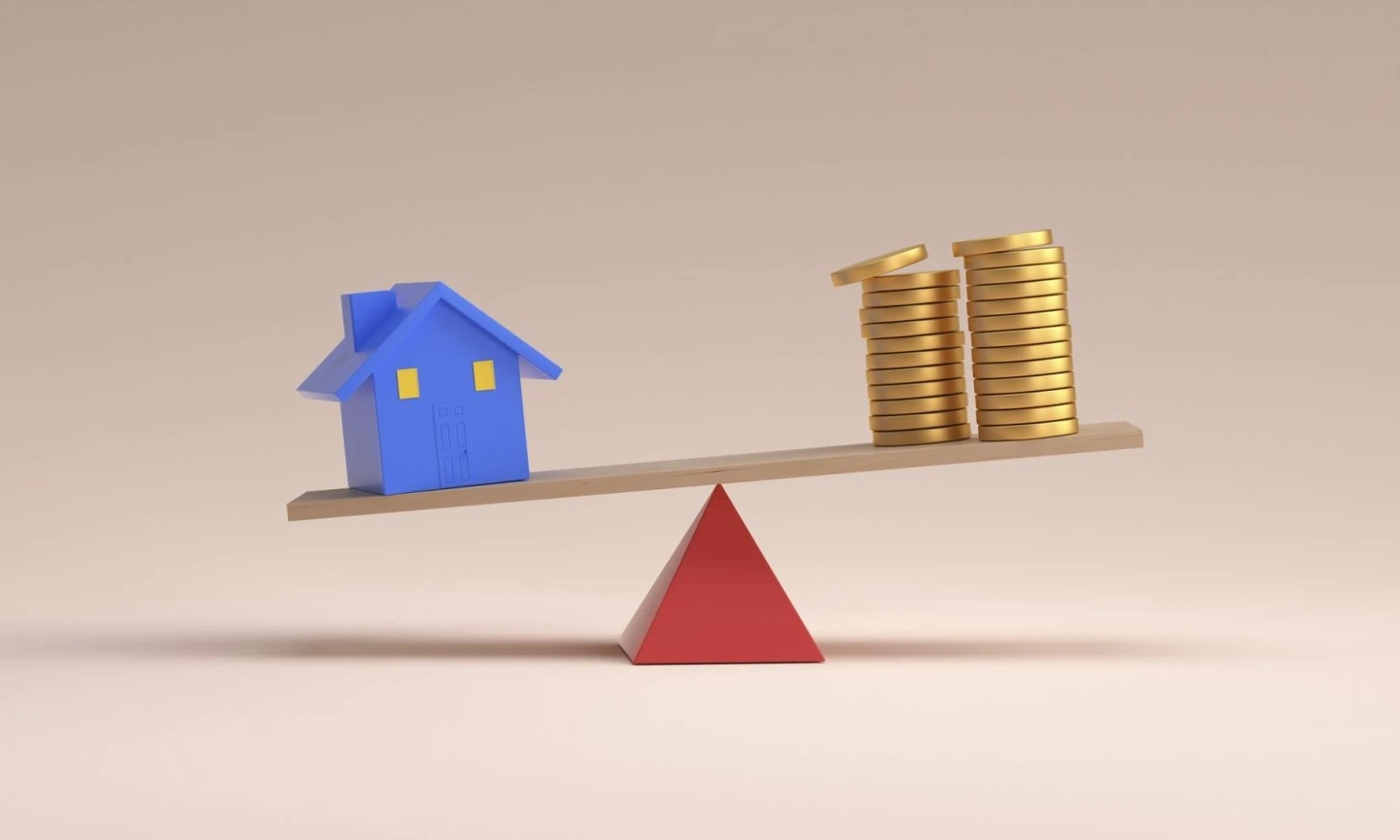
If prices are not falling despite reduced accessibility, it’s for a simple reason: there are still not enough properties available.
Data from the Quebec Institute of Statistics shows that housing starts are increasing, yesbut not enough to catch up with years of accumulated demand or to fully absorb population growth.
In real estate, a significant price drop usually happens when there is excess supply.
In 2026, that is not the case.
Even if some buyers temporarily step back, inventory remains limited in several segments. Well-located, well-built, and properly priced properties are still selling.
The market is no longer overheating. But it is not empty either.
This tense balance explains why prices remain resilient.
After excess comes a return to realism
It’s also important to put things into perspective.
Between 2020 and 2023, the market experienced an extraordinary period: historically low rates, strong demand, and overheating in many regions. Some adjustments were inevitable.
Today, according to projections relayed by the APCIQ, price increases are closer to 2% to 3%, depending on the segment.
This is no longer a surge.
It is controlled growth.
And it is probably healthier.
A slower market allows for more thoughtful decisions. Less impulsivity. Less artificial pressure. More planning.
For both households and developers, this relative stability changes the dynamic.
Quebec City: a more accessible balance
Looking at regions, the contrast between Montreal and Quebec City is revealing.
Montreal remains a major economic engine, but prices are high and affordability is more strained.
In Quebec City, the positioning is different.
Prices are more affordable by comparison. Growth is present but less aggressive. The economic environment is stable.
This combination attracts buyers looking for a balance between budget, quality of life, and appreciation potential.
It’s no coincidence that the provincial capital stands out in several recent analyses.
So, is the market really holding?
When you put all the pieces together, the answer is nuanced.
Yes, affordability is more difficult.
Yes, some households are on pause.
But there is no collapse in demand.
There is no massive surge in inventory.
Housing needs remain strong. Construction is still not sufficient to fully meet them.
The market holds because it is supported by this demographic and structural reality.
This is not an illusion. It is a fragilebut realbalance.
New construction: a concrete solution, not just a theory
In this context, new construction becomes more than an option. It becomes part of the solution.
Adding units helps relieve pressure. But beyond volume, new builds also offer:
- Residential construction warranties
- Better energy efficiency
- Modern safety and performance standards
- More predictable maintenance costs
Yes, the purchase price may seem higher initially.
But over time, energy savings, fewer unexpected expenses, and better material quality have a real impact on a household’s budget.
If we want to seriously talk about affordability, we need to talk about supply.
And if we talk about supply, we must talk about construction.
In 2026, the Quebec real estate market is not built on a fragile illusion. It is built on a real housing need and an insufficient level of production.
The real question is not whether the market will collapse tomorrow.
The real question is whether we will build enoughand intelligently enoughto sustainably meet demand.
Expert insight
After several real estate cycles, one thing becomes clear: markets do not collapse simply because affordability tightens. They correct when a deep imbalance appears between supply and demand.
In 2026, in Quebec, this imbalance does not come from an excess of properties, but from a persistent shortage of new units.
The issue is not predicting a dramatic crash. It is understanding how to structure supply to meet real, but financially constrained, demand.
This requires more transparency, better data, and stronger visibility for new developments that genuinely contribute to market balance.
It is in this context that specialized platforms like Vistoo play a strategic role: by highlighting new real estate and development projects, they help improve understanding of available supply and support more informed decision-making for both buyers and professionals.
About the author
Enzo
Fernandez
Enzo is the co-founder of Vistoo. With over five years of experience in the industry, he has expertise in both the rental and sales markets, along with solid experience in construction and property management. A marketing graduate, he also completed several university projects focused on real estate.
When he’s not working on Vistoo, you’ll likely find him on a soccer field, staying active, or traveling with his laptop, because he just can’t seem to fully unplug from work.