
Hydro-Québec Bills in 2026: Why Energy Efficiency Gives New Homes an Edge
When people start looking for a new home, there is usually one number they check first: the rent.
$1,700, $1,900, $2,100 a month. You compare apartments, neighbourhoods and square footage, then figure out what fits your budget.
But in 2026, there is another expense worth looking at a little more closely: electricity.
Since April 1, residential Hydro-Québec electricity rates have increased by 3%. The Régie de l'énergie du Québec has also set increases of 3% for 2027 and 2.6% for 2028, although those two future increases remain subject to change as the regulatory process continues.
On paper, 3% does not sound like much.
But once winter arrives and the heating system is running for weeks at a time, the difference between a home that holds onto its heat and one that constantly loses it can end up mattering much more than expected.
That is where new construction deserves a closer look.
The home itself plays a role in your electricity bill
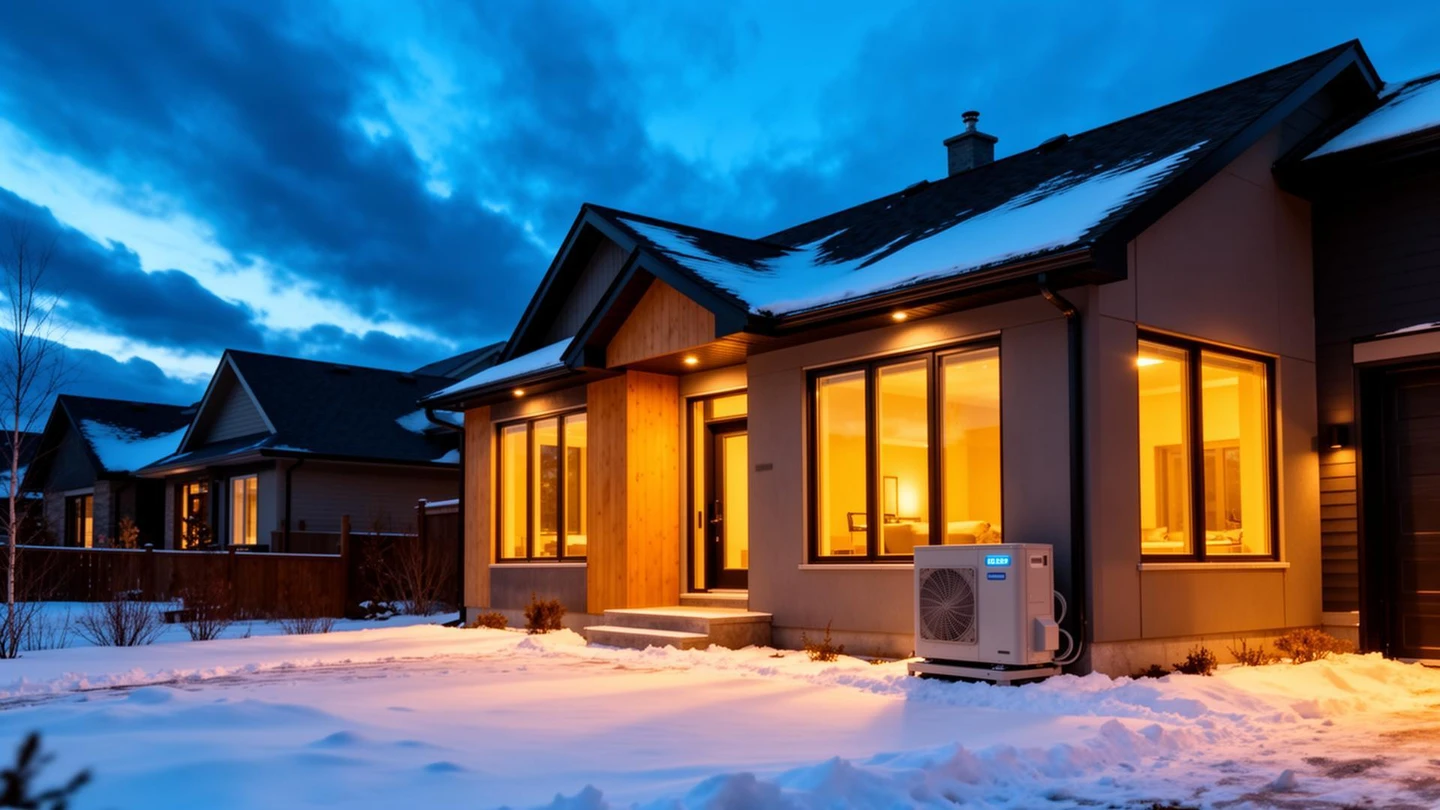
It is easy to think that a Hydro-Québec bill mostly comes down to our personal habits. That is true, but only to a point.
The building itself matters too.
For a household whose home is electrically heated, Hydro-Québec estimates that heating and air conditioning account for an average of 54% of electricity consumption.
That means a large share of the energy used in a home goes simply toward keeping it at a comfortable temperature.
The idea is fairly easy to picture. If a home loses heat quickly, the heating system has to work harder to maintain the temperature. A building that holds onto heat more effectively can reduce those heating needs.
Hydro-Québec also notes that air leakage can account for up to 25% of a home's heat loss. Insulation and air sealing are therefore not just technical topics for building professionals. They can have a very practical impact on energy consumption.
What you cannot see during a viewing can matter for years
When you tour an apartment, you naturally notice the kitchen, bathroom, natural light and size of the rooms.
You probably pay less attention to what is happening behind the walls.
Yet insulation, windows, air tightness and the building's overall design all play a role in its energy performance.
The Québec Building Code includes specific energy-efficiency requirements, including requirements related to insulation, thermal performance and thermal bridging.
For someone living in the home, the principle is fairly simple.
The less heat escapes, the less heat needs to be replaced.
And when it is 20 degrees below zero outside, that is not exactly the kind of detail you want to discover after signing your lease.
A heat pump can make a real difference
The heating system itself deserves a closer look as well.
Electric baseboards generate heat directly. A heat pump works differently: rather than producing heat directly in the same way, it moves heat from one place to another.
According to Hydro-Québec, a heat pump can be up to three times more efficient than electric baseboards for heating during the cold season.
Hydro-Québec also indicates that a heat pump can reduce electricity consumption for heating by 25% to 40% compared with electric baseboards used on their own.
That does not mean every home with a heat pump will have the same electricity bill.
Floor area, number of occupants, thermostat settings and everyday habits all matter.
Still, the principle is worth paying attention to. When heating represents such a large share of electricity consumption, the system doing the heating naturally becomes part of the equation.
The lowest rent is not always the lowest-cost home
This may be the way of comparing homes that deserves the biggest rethink.
Take two fairly similar apartments.
The first costs a little less each month, but the building is older and the heating system uses more electricity.
The second costs slightly more, but it is better insulated and equipped with a heat pump.
Which one is actually more affordable?
You cannot answer that by looking at the advertised rent alone.
You also need to know how much energy the home uses.
You could call this the true cost of the home: what it actually costs to live there, not just what you pay to get the keys.
That way of comparing homes is becoming especially relevant in 2026.
Electricity rates are changing, and an expense that looks fairly minor on a monthly basis can add up over the course of a year.
New construction does not eliminate your electricity bill
It is worth avoiding the easy assumptions.
A new home does not guarantee a low Hydro-Québec bill.
A larger apartment will generally use more energy than a smaller one. A family will have different needs from a single occupant. Temperature settings and everyday habits matter too.
The real advantage of new construction is somewhere else.
The building is designed according to more recent standards, with features that can improve energy performance and comfort.
And some of the things people rarely think to check during a viewing can end up mattering quite a bit.
What type of heating system does the home use?
Is there a heat pump?
What are the windows like?
How is the building insulated?
Is there any information available about the energy consumption of the unit or building?
These are fairly simple questions. Yet they can make it much easier to compare two homes realistically.
In 2026, the real cost of a home deserves a closer look
The increase in Hydro-Québec rates is a useful reminder of something that is easy to overlook when searching for an apartment or buying a home: the advertised price does not tell the whole story.
You also need to think about what the home costs once you actually live there.
Heating. Electricity. Air conditioning. The other expenses that come back every month.
That is where energy efficiency becomes increasingly important.
A new home is not necessarily cheaper.
But it may be designed to reduce heat loss and use energy more efficiently to keep the home comfortable.
And with electricity rates changing, that difference is worth paying attention to.
The next time you compare two homes, do not look only at the number on the listing.
The rent tells you what the home costs. Its energy performance helps you understand what it really costs to live there.
About the Author
Enzo
Fernandez
Enzo is the co-founder of Vistoo. With over five years of experience in the industry, he has expertise in both the rental and sales markets, along with solid experience in construction and property management. A marketing graduate, he also completed several university projects focused on real estate.
When he’s not working on Vistoo, you’ll likely find him on a soccer field, staying active, or traveling with his laptop, because he just can’t seem to fully unplug from work.